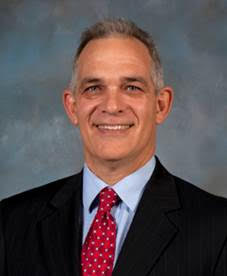
Larry P. Goodson is Professor of Middle East Studies at the U.S. Army War College, where he is the only person to hold the General Dwight D. Eisenhower Chair of National Security twice (2014-2017, 2004-2007). Dr. Goodson has been continually called upon to serve as a regional advisor on Afghanistan, Pakistan, and the Middle East by senior U.S. military and political leaders.
Among his other academic appointments, Dr. Goodson taught at the American University in Cairo (1994-2000) and conducted his dissertation field work in Peshawar, Pakistan (1986-1987). Dr. Goodson completed all his academic work at the University of North Carolina. He is the author of the New York Times bestselling Afghanistan’s Endless War: State Failure, Regional Politics, and the Rise of the Taliban (2001) as well as numerous chapters and articles. Currently, he is writing “The Syrian War: First Great War of the 21st Century.” In this, he discusses his in-depth research on hybrid warfare. He also currently teaches a course in hybrid warfare at the U.S. Army War College.
Dinner Meeting held September 17, 2026 at the The Susquehanna Club
Scribed by Matthew Nettleton
On September 17, 2026, Professor Larry Goodson examined whether the United States’ current war against Iran was strategically justified and whether its costs outweighed its benefits. He stressed that the views expressed in his lecture were his own. His presentation began with several statistics as a framework for understanding the conflict: (1) approximately one-quarter of global maritime oil trade passes through the Strait of Hormuz, with substantial quantities of crude oil flowing to Asian markets; (2) projected 2026 gasoline prices vary significantly across the United States; and, (3) President Trump’s current unpopularity. Goodson argued that these issues are interconnected because disruptions to oil transportation caused by the war increases fuel and consumer prices, and wars are ultimately political decisions that require public support. Drawing on the classical idea that states go to war because of fear, honor, or interest, he suggested that the justification for the present conflict should be evaluated in terms of its strategic objectives and its political and economic consequences.
Goodson next provided historical and demographic context for understanding Iran and its relationship with the United States. He explained that Iran was once one of America’s closest Middle Eastern allies, largely due to the threat of the Soviet Union, but this relationship changed dramatically following the Iranian Revolution, the fall of the Shah, and the takeover of the United States embassy in 1979. Subsequently, the United States developed closer relationships with Israel and Saudi Arabia and embraced the Carter Doctrine which identified maritime oil trade in the Persian Gulf as a vital interest. During the 1980s, Iran established a different political and military orientation under Ayatollah Ruhollah Khomeini.
Goodson emphasized Iran’s size, population of approximately 93 million, ethnic and religious diversity, and geographic characteristics. He then discussed the Iran-Iraq War from 1980-1988, particularly the enormous human cost of the conflict and Iran’s development of the Islamic Revolutionary Guard Corps, Quds Force, and a “forward defense” strategy through regional partners and proxy forces.
Goodson briefly introduced the International Relations Theorem which divides into realism, liberalism, and constructivism, identifying himself as a realist who sees an anarchic world governed by power. He also touched on Clausewitz’s two major propositions concerning war: (1) that war is an enduring phenomenon involving either the use of force to compel an opponent to do one’s will or as a continuation of politics by other means and (2) war can change character, as new technologies, legalities, and power systems can change how wars are fought.
Turning to the current conflict, Goodson argued that the United States attacked Iran primarily because Israel already had plans to attack and Netanyahu persuaded Trump to join, without giving a public case for war or a request for congressional authorization. Goodson was skeptical of the other possible motives, including nuclear weapon prevention, Iranian-backed terrorism, and regime change. His verdict was that the war was not, and likely is not, worth it. In his view, the United States is losing, and winning would require ground troops which would result in heavy casualties. The closure of the Strait of Hormuz has raised costs, munitions are depleted, and Trump’s unpopularity may cost his party in the upcoming midterm elections. Goodson also noted an erosion in America’s global leadership, with China and Russia benefitting. While the current war started during the Trump administration, difficulties surrounding the Iran conflict extend beyond any single administration and reflect a longer-running problem of United States strategy and policy in the Middle East.